Engineering
African
Excellence
ANED Dev Center
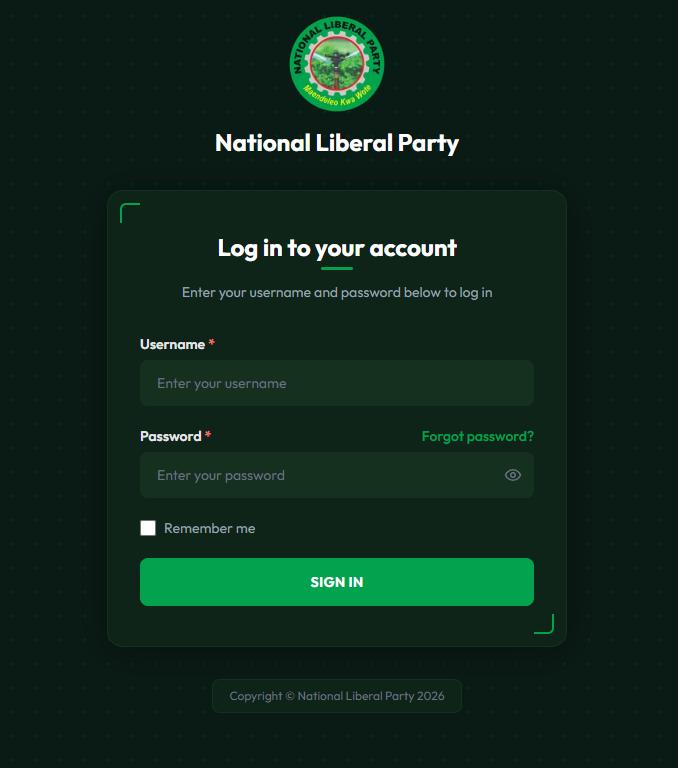
When the National Liberal Party of Kenya approached ANED to build a secure, fully owned database management system, the requirements were clear: no third-party cloud dependencies, no foreign-hosted data, and complete control over every byte of party membership, communications, and operational data. This project became a case study in why African institutions are increasingly turning to local developers for their most sensitive systems — and how Kenya's Data Protection Act of 2019 is accelerating this trend.
Why Local Development Matters for Sensitive Data
Political organisations, government agencies, and financial institutions across Africa are waking up to a fundamental reality: data sovereignty is not just a compliance checkbox, it is a strategic imperative. When your membership database, donor records, and internal communications sit on servers controlled by foreign companies in foreign jurisdictions, you are one subpoena, one policy change, or one geopolitical shift away from losing control of your most sensitive information.
Kenya's Data Protection Act (DPA), enacted in 2019 and enforced by the Office of the Data Protection Commissioner, fundamentally changed the rules. The Act requires that personal data of Kenyan citizens be processed lawfully, with clear consent, and with appropriate safeguards. For political parties, this means membership data, voter outreach records, and communication histories all fall under strict protection requirements. The DPA gives individuals the right to know what data is held about them, to request correction or deletion, and to object to processing. Non-compliance carries fines of up to five million Kenya Shillings or one percent of annual turnover. For the National Liberal Party, engaging a local development team that understood these regulations from the ground up was not optional — it was essential.
The Brief: A Fully Owned Database System
The National Liberal Party needed a database management system that could handle party membership records across all 47 counties, event and campaign management data, internal communications and document storage, financial records and donor management, and voter outreach tracking. The critical requirement was full ownership. The party would own the hardware, the software, the data, and every layer in between. No SaaS subscriptions that could be terminated. No cloud provider that could be compelled by a foreign government to hand over data. No vendor lock-in that would leave them stranded if a relationship soured.
Our engineering team in Nairobi designed a system built on PostgreSQL as the primary data store, with application-level encryption using AES-256 for sensitive fields. The application layer was built with a Node.js backend exposing a REST API, and a React frontend optimised for the varying connectivity conditions across Kenya — from fibre-connected offices in Nairobi to 3G-dependent branches in rural counties. Every component is open source, meaning the party is never dependent on a single vendor for continued operation. Learn more about our custom software development approach.
Engineering for Data Privacy by Design
Privacy was not bolted on after the fact — it was architected into every layer of the system. At the database level, personally identifiable information is encrypted at rest. Access controls enforce the principle of least privilege: a county coordinator can view membership data for their county but cannot access records from other regions. Every data access is logged with an immutable audit trail, recording who accessed what, when, and from where. This audit capability is not just good practice — it is a direct requirement under Kenya's DPA for organisations processing personal data at scale.
We implemented a consent management module that tracks exactly what each party member has consented to: receiving SMS communications, email newsletters, sharing data with coalition partners, and so on. Members can withdraw consent at any time through a self-service portal, and the system immediately enforces those preferences across all communication channels. Data retention policies automatically flag records that have exceeded their retention period, prompting administrators to either renew consent or delete the data. This level of compliance automation would have been prohibitively expensive to achieve with a generic off-the-shelf solution, but building it from the ground up allowed us to tailor every feature to the specific legal requirements of operating a political party in Kenya.
The Broader Trend: Africa's Demand for Local Development
The National Liberal Party project reflects a continent-wide shift. Across Africa, institutions that handle sensitive data are increasingly choosing local development partners over foreign vendors. This trend is driven by several converging factors. First, data protection legislation is spreading rapidly: Nigeria's NDPR, South Africa's POPIA, Ghana's Data Protection Act, Rwanda's law on personal data protection, and Uganda's Data Protection and Privacy Act all impose obligations that are easier to meet when your development team operates within the same legal framework.
Second, there is growing awareness that technical decisions are political decisions. Choosing where data is hosted, who can access it, and which laws govern it are questions with real consequences for sovereignty and self-determination. African governments and institutions are recognising that building domestic technology capability is not just an economic development strategy — it is a matter of national security and institutional independence.
Third, the talent exists. Africa's software engineering workforce is growing rapidly, with hubs in Nairobi, Lagos, Cape Town, Accra, and Kigali producing world-class developers. At ANED, our engineers in our East Africa center have deep expertise in data protection regulations, local infrastructure constraints, and the specific needs of African institutions. The argument that organisations must go abroad for sophisticated software development no longer holds.
Delivering on Time, Within Scope
The NLP database system was delivered on schedule and within the agreed scope. The system now manages records for party members across Kenya's 47 counties, with role-based access control that mirrors the party's organisational structure. Real-time dashboards give leadership visibility into membership trends, regional activity, and campaign metrics. The self-hosted architecture means the party's IT team can maintain and extend the system independently, with ANED available for ongoing support and feature development as needed.
The Omondi K'oyoo, Secretary General of the National Liberal Party, put it simply: "We needed a secure, fully owned database system built precisely to our specifications. ANED delivered exactly that, on time, within scope, and with a level of transparency throughout the project that gave us genuine confidence at every stage."
For institutions across Africa considering their data management strategy, the lesson from this project is clear: you do not need to sacrifice control for capability. Local development teams can deliver world-class systems that meet international security standards while respecting local laws and keeping you in full control of your data. The era of defaulting to foreign-hosted solutions for sensitive institutional data is ending — and that is a good thing for Africa.