Engineering
African
Excellence
ANED Dev Center
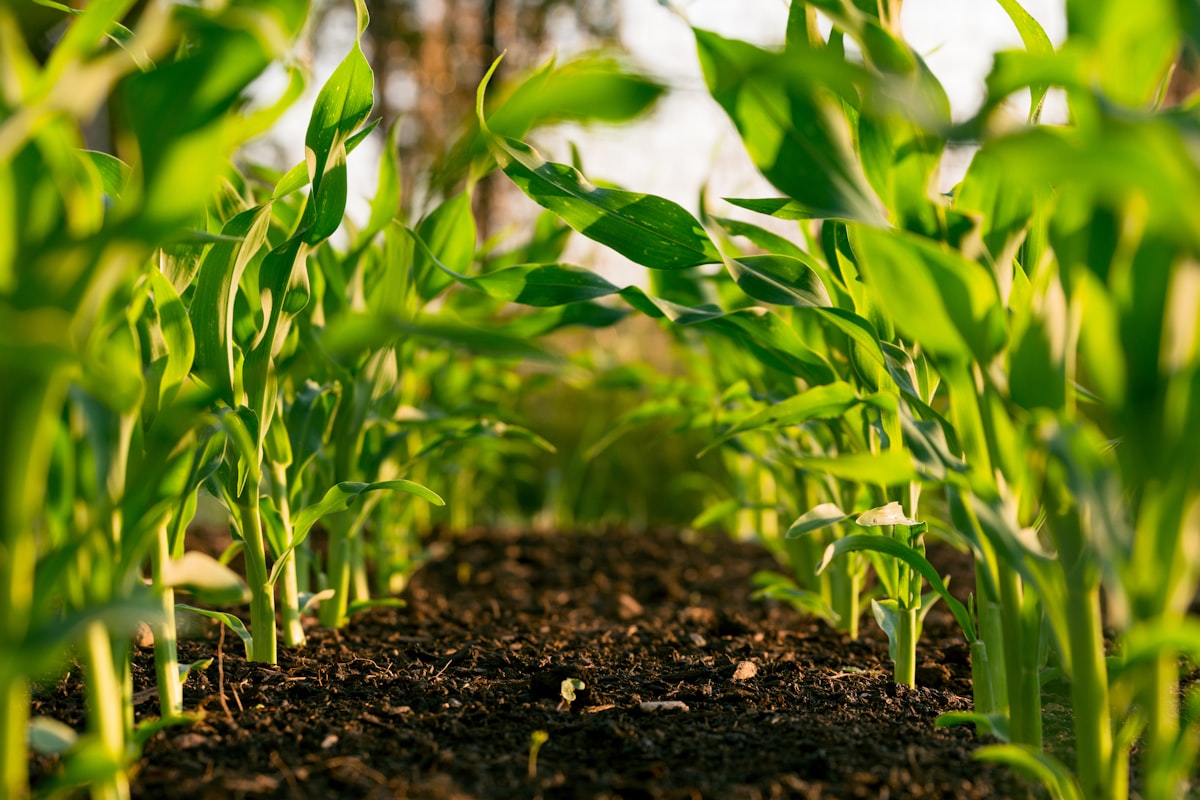
Agriculture employs over 60% of Africa's workforce and accounts for roughly 23% of the continent's GDP, yet African farmers face challenges that their counterparts in industrialized nations solved decades ago. Unpredictable weather patterns, pervasive crop diseases, limited access to markets and financing, and a near-total absence of precision agriculture tools have kept yields at a fraction of their potential. Now, a wave of African startups is deploying artificial intelligence to tackle these challenges head-on, building solutions that work within the real constraints of African farming: limited connectivity, low-cost devices, and the need to reach farmers who may never have used a smartphone.
AI-Powered Crop Disease Detection: From Lab to Field
Crop diseases cost African agriculture an estimated $50 billion annually, with losses frequently reaching 30-50% of total harvest for affected farmers. Traditional disease identification relies on agricultural extension officers who are chronically understaffed across the continent, with some countries having fewer than one extension worker per 5,000 farmers. AI-powered image recognition has emerged as the most promising solution to this gap. Startups like PlantVillage in East Africa, Zenvus in Nigeria, and CropDiagnosis in Ghana have trained computer vision models on hundreds of thousands of images of diseased crops, enabling farmers to identify diseases by simply photographing affected plants with their phones. These models can detect over 30 common crop diseases affecting maize, cassava, tomatoes, and coffee with accuracy rates exceeding 93%, often identifying diseases days before symptoms become visible to the human eye.
The technical challenge of deploying these models in African agricultural contexts has driven significant innovation in edge AI. Because most farming areas lack reliable internet connectivity, disease detection models must run locally on the farmer's device rather than calling cloud-based APIs. African AI teams have pioneered model compression techniques that shrink neural networks from hundreds of megabytes to under 10MB while maintaining diagnostic accuracy above 90%, enabling real-time inference on devices with as little as 512MB of RAM. ANED's AI and machine learning platform supports these edge deployment scenarios through our model optimization pipeline, which automatically quantizes, prunes, and compiles models for target device profiles commonly found in African markets. The result is AI that works where it is needed most: in fields with no cell signal, on devices that cost under $50, delivering diagnostics that would previously have required a trained agronomist.
Satellite Imagery and Precision Agriculture
Satellite imagery analysis has transformed the economics of precision agriculture in Africa, making it feasible to monitor millions of hectares of farmland at costs that were unimaginable a decade ago. Companies like Apollo Agriculture in Kenya and Aerobotics in South Africa use multispectral satellite data combined with machine learning algorithms to generate field-level insights on crop health, soil moisture, and growth patterns. These insights enable farmers to target irrigation, fertilizer application, and pest treatment with precision that conserves expensive inputs while maximizing yields. For a smallholder farmer spending a significant portion of their annual income on fertilizer, knowing exactly which portion of their field needs treatment versus which is already healthy can make the difference between profit and loss.
The AI models powering this analysis have been specifically trained on African agricultural landscapes, which differ markedly from the large monoculture fields that dominate North American and European training datasets. African smallholder farms are typically fragmented, intercropped, and interspersed with natural vegetation, making it significantly harder for standard remote sensing algorithms to delineate field boundaries and classify crop types. African agtech startups have addressed this through training datasets built from ground-truth data collected by networks of local agents who physically visit farms, photograph crops, and record conditions. These datasets, now comprising millions of labeled observations, have produced models that outperform globally trained alternatives by 40% or more on African agricultural landscapes. Several of these startups have also integrated weather prediction models that combine satellite data with readings from low-cost ground-based weather stations, providing hyperlocal 10-day forecasts that help farmers make planting and harvesting decisions with unprecedented accuracy.
WhatsApp AI: Meeting Farmers Where They Are
Perhaps the most innovative distribution strategy for agricultural AI in Africa has been the use of WhatsApp as a delivery channel. With over 300 million WhatsApp users across Africa, the messaging platform represents the single largest digital touchpoint for the continent's farming population. Startups like Arifu in Kenya, Farmcrowdy in Nigeria, and DigiFarm have built AI-powered chatbots that operate entirely within WhatsApp, allowing farmers to access crop advice, disease diagnosis, market prices, and weather forecasts without downloading any additional application. A farmer can photograph a sick plant, send the image via WhatsApp, and receive a diagnosis with treatment recommendations within seconds, all through an interface they already use daily to communicate with family and buyers.
Building effective AI experiences within WhatsApp's constraints has required creative engineering. WhatsApp's API limits message sizes, restricts interactive elements compared to native apps, and imposes rate limits that complicate serving millions of users. African agtech teams have developed sophisticated conversation design patterns that guide farmers through complex diagnostic workflows using simple numbered menu responses, voice notes for farmers who prefer oral communication, and compressed images that transmit quickly even on 2G connections. Natural language processing models trained on agricultural vocabulary in Swahili, Hausa, Yoruba, Amharic, and other major African languages enable farmers to describe their problems in their own words rather than navigating rigid menu structures. The economics are compelling: where a native mobile app might cost $2-5 per user to acquire and suffers from high abandonment rates, WhatsApp-based agricultural AI services achieve acquisition costs under $0.10 and retention rates exceeding 70%, because they live inside a platform the farmer already trusts and uses every day.
Empowering Smallholder Farmers with Data-Driven Decisions
Smallholder farmers, who cultivate plots typically smaller than two hectares and number over 33 million across sub-Saharan Africa alone, have historically been excluded from the data revolution that transformed agriculture in developed nations. They lack access to soil testing laboratories, market price databases, credit scoring systems, and the agronomic advisory services that larger commercial farms take for granted. AI is collapsing this information asymmetry at unprecedented speed. Startups are building credit scoring models that use satellite imagery of a farmer's field, mobile money transaction history, and social network data to assess creditworthiness without requiring traditional collateral or financial records. These AI-driven credit scores have unlocked over $500 million in agricultural lending across East and West Africa since 2023, enabling farmers to purchase quality seeds, fertilizers, and equipment they could never previously afford.
Market access platforms powered by AI are equally transformative. Machine learning models that predict commodity price fluctuations based on weather data, satellite-observed harvest patterns, and regional demand signals help farmers decide when to sell their produce for maximum return rather than accepting the first buyer's offer out of desperation. AI-powered logistics optimization is reducing post-harvest losses, which currently destroy up to 40% of African food production, by matching available transport capacity with harvest timing and identifying the fastest routes to market or cold storage. Some platforms are even using computer vision to grade produce quality automatically, enabling farmers to access premium markets that were previously gatekept by middlemen who controlled quality certification. The cumulative effect of these AI applications is beginning to reshape the fundamental economics of smallholder farming in Africa, shifting power from intermediaries to producers.
The Future: Precision Agriculture at Continental Scale
The next phase of AI-driven agriculture in Africa will be defined by integration and scale. Individual point solutions for disease detection, credit scoring, weather prediction, and market access are beginning to converge into integrated platforms that provide farmers with a complete digital agriculture stack. ANED's AI infrastructure plays a growing role in this convergence, providing the model training, deployment, and monitoring capabilities that agricultural AI startups need to scale from thousands to millions of users. Our vector database and NLP capabilities enable agricultural knowledge bases that preserve and digitize indigenous farming knowledge, decades of extension service research, and real-time field observations into searchable, AI-accessible repositories that power increasingly sophisticated advisory systems.
Government adoption of AI-powered agricultural monitoring is accelerating the impact further. Kenya's Ministry of Agriculture has deployed satellite-based crop monitoring across 80% of the nation's arable land, using AI to identify regions at risk of food insecurity months before traditional surveys would detect problems. Nigeria's Agricultural Development Programme is piloting AI-driven precision fertilizer recommendations that have increased yields by 22% in trial regions while reducing fertilizer usage by 15%, addressing both productivity and environmental sustainability. As these government-scale deployments generate massive new datasets and more African AI researchers focus on agricultural applications, the continent is building a virtuous cycle: better data produces better models, which attract more investment, which generates more data. Within this decade, AI has the potential to help Africa achieve food security not by importing Western agricultural technology but by building solutions purpose-designed for the realities of African farming.